

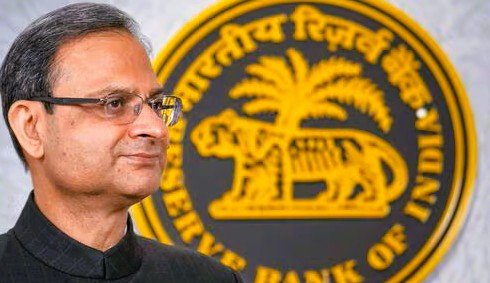
The Reserve Bank of India (RBI) has announced the decision of its latest Monetary Policy Committee (MPC) meeting. This meeting was chaired by RBI Governor Sanjay Malhotra.
After reviewing the country’s economic situation, inflation levels, and global conditions, the RBI has decided to keep interest rates unchanged.
Let’s understand what RBI said and what it means for common people.
Repo Rate Remains the Same at 5.25%
The RBI has kept the repo rate unchanged at 5.25%.
What is Repo Rate?
The repo rate is the interest rate at which banks borrow money from RBI. When this rate changes, loan interest rates also change.
Since RBI did not change the repo rate:
- Banks will borrow at the same cost
- Loan interest rates are likely to stay the same
👉 This is good news for people who already have home loans, car loans, or personal loans.
India’s Economy Is Growing Well: GDP Growth at 7.4%
RBI said that India’s economy is strong and stable.
- RBI expects GDP growth of 7.4%
- This shows that businesses are growing and demand is strong
What does this mean?
A strong GDP growth means:
- More business activity
- Better job opportunities
- Higher income levels
- Stronger confidence in the economy
India continues to be one of the fastest-growing major economies in the world.
Inflation Is Low and Under Control
Inflation means the rise in prices of daily goods and services.
RBI said:
- Inflation is around 2%
- This is well below RBI’s target level of 4%
Why is this important?
Low inflation means:
- Food prices are stable
- Fuel and daily essentials are not becoming costly fast
- Household budgets remain balanced
Because inflation is already low, RBI felt no urgent need to cut or increase interest rates.
RBI Keeps Policy Stance “Neutral”
RBI has kept its policy stance neutral.
What does “neutral” mean?
It means:
- RBI is not planning to increase rates immediately
- RBI is not planning to cut rates immediately
- RBI will wait for future data before taking action
RBI wants to be cautious due to:
- Global economic uncertainty
- Changes in crude oil prices
- Geopolitical tensions
- Global interest rate movements
What Does This Mean for Common People?
Home Loan and Car Loan Borrowers
- EMIs will remain unchanged
- No sudden increase in loan burden
- Stability is good for monthly budgeting
Fixed Deposit and Savings Account Holders
- FD and savings interest rates may stay stable
- No major changes expected in returns
Business Owners
- Stable interest rates help in planning investments
- Borrowing costs remain predictable
Everyday Expenses
- Low inflation means prices of daily items are not rising sharply
- This helps middle-class and low-income families
Why RBI Chose to Maintain Status Quo
RBI kept rates unchanged because:
- Inflation is already very low
- Economic growth is strong
- Global risks still exist
- RBI wants long-term stability instead of quick decisions
RBI believes that patience is better than rushing into changes.
Overall Impact of RBI MPC Decision
- No shock to borrowers
- No surprise for savers
- Economy remains stable
- Growth outlook remains positive
This decision supports economic balance and financial stability.
Simple Summary (One Look)
- Repo Rate: 5.25% (No change)
- GDP Growth: 7.4%
- Inflation: Around 2%
- Policy Stance: Neutral
- Impact: Stability for loans, savings, and economy
The RBI MPC decision for 2026 shows that India’s economy is on a strong and steady path. By keeping interest rates unchanged, RBI has ensured stability for common people, businesses, and investors.