

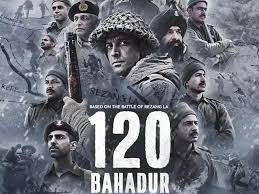
120 Bahadur Movie Review – A Powerful Tribute to India’s Unsung Heroes
120 Bahadur, directed by Razneesh “Razy” Ghai, is one of those rare Hindi war films that attempts to blend historical bravery with modern cinematic craft. Set against the backdrop of the 1962 Sino–Indian War, the film focuses on the legendary real-life battle of Rezang La, where 120 soldiers of the Indian Army’s Charlie Company, under the leadership of Major Shaitan Singh, stood fearlessly against thousands of Chinese troops. Farhan Akhtar, playing the brave and composed Major Shaitan Singh Bhati, brings calm authority and emotional depth to the narrative.
A Story of Unmatched Courage
The soul of 120 Bahadur lies in its retelling of a heroic chapter from Indian history. These were not just soldiers; they were ordinary men who displayed extraordinary courage. The film portrays their grit, discipline and unwavering loyalty to the nation with sincerity and respect. From the very beginning, the story builds a sense of tension and anticipation. You know the odds are impossible, yet the bravery of these men makes you believe in miracles.
The screenplay does a commendable job of introducing the soldiers and their connections with home. Though some character arcs remain slightly underdeveloped, their emotions, fears, pride and bonds feel real. The audience becomes deeply invested in their journey long before the first bullet is fired.
Farhan Akhtar Shines as Major Shaitan Singh
Farhan Akhtar’s portrayal is one of the strongest points of the film. He brings restraint, dignity and emotional control to the role. Instead of loud dialogues, his performance relies on subtle expression—eye contact, tone and stillness during moments of crisis. Through him, the film captures the personality of a leader who motivates his battalion, consoles them, and inspires them with courage even when defeat appears certain.
Supporting actors, especially the younger ones, display wonderful chemistry. Their banter, brotherhood, small jokes and moments of fear humanize them, making their eventual sacrifices even more impactful.
Visual Grandeur and Realistic War Craft
Cinematography is a standout aspect. The high-altitude Ladakh landscapes are filmed beautifully. The barren beauty, freezing winds and harsh terrain become characters themselves, reminding viewers what the soldiers endured aside from the enemy fire. The battle scenes are shot with clarity—no unnecessary slow motion, no over-the-top heroism. Instead, the film opts for realism. Gunfire sounds authentic, explosions are grounded, and the positioning of soldiers feels tactically correct.
The director uses silence just as powerfully as sound. There are sequences where the snow-covered valley echoes with nothing but tension. These moments make the film more immersive and emotional.
Emotional Moments That Leave a Mark
While the first half focuses more on character building, the emotional notes grow stronger as the story progresses. Letters from home, flashbacks of parents and children, and soldiers remembering their loved ones add a human dimension to the war. The second half is intense, emotional and at times heartbreaking. The battle sequences capture both the horror and the heroism of war.
One of the most touching aspects of the movie is the portrayal of unity. Soldiers come from different states, different backgrounds and speak different languages, yet they fight as one. Their shared courage becomes the heart of the film.
Music and Background Score
The songs themselves are not the strongest part of the film—they are functional but not memorable. However, the background score is impactful in key scenes. It maintains a patriotic undertone without feeling forced. The silence-between-sound technique heightens drama more effectively than loud orchestral music.
Pacing and Weak Links
No film is without flaws, and 120 Bahadur has a few visible ones:
- The first half occasionally moves slowly, dragging certain emotional scenes longer than needed.
- Some supporting characters deserved deeper arcs, which would have made their sacrifices even more powerful.
- Scenes involving family melodrama sometimes break the war narrative’s tension.
- A few dialogues feel predictable or too cinematic.
Despite these shortcomings, the overall storytelling remains sincere and engaging.
Historical Context and Controversy
The movie is inspired by the legendary Battle of Rezang La, where Indian soldiers fought until their last breath. Although 120 Bahadur attempts to stay true to history, it has faced a notable controversy. A PIL was filed claiming that the film inaccurately represents the Ahir regiment’s role in the battle. This debate adds an extra layer of curiosity for viewers who value historical authenticity.
However, the film’s intention is clearly respectful—it aims to honor the heroes, not distort history.
A Cinematic Salute to the Brave
What makes 120 Bahadur stand out is its sincerity. It doesn’t rely on jingoism or exaggerated patriotism. Fear, courage, pain, hope, loyalty—every emotion is delivered with honesty. The director ensures the soldiers are shown as real human beings, not invincible superheroes.
The film’s final moments are particularly moving. Watching the soldiers fight till their last breath, protecting the post even when rescue is impossible, leaves the audience emotional and proud. It reinforces the message that heroes are not defined by survival but by sacrifice.
Overall Verdict
120 Bahadur is not just a war movie—it is a heartfelt tribute to India’s unsung heroes. It may not be perfect, but its emotional depth, powerful performances, and breathtaking visuals make it a memorable experience. It educates, inspires, and touches the heart. Anyone who respects the Indian Army or enjoys intense real-life stories of valor should not miss this film.
Rating: 3.5/5
A sincere, emotional and visually stunning salute to 120 real heroes.