

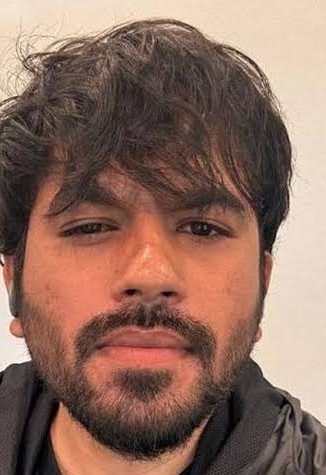
From a joke that went viral to over 22 million Instagram followers—this is the extraordinary story of how one man turned a Supreme Court insult into a political rebellion that has shaken India’s establishment.
The Origin: A Tweet That Changed Everything
On May 15, 2026, India’s Chief Justice Surya Kant made a remark during a Supreme Court hearing that would accidentally ignite a political wildfire. Referring to unemployed youth with fake degrees, he reportedly compared them to “cockroaches” and “parasites.” The comment, which the CJI later clarified was taken out of context, had already struck a raw nerve across the country.
The very next day, a 30-year-old Boston University graduate named Abhijeet Dipke posted a simple question on X that would change his life forever: “What if all cockroaches come together?”
Within hours, the Cockroach Janta Party (CJP) was born—a satirical online movement that would go on to amass over 22 million Instagram followers in less than a week, surpassing the ruling BJP’s 9 million followers. What started as a joke had become India’s fastest-growing political phenomenon.
Who Is Abhijeet Dipke?
From Chhatrapati Sambhajinagar to Boston
Abhijeet Dipke grew up in Chhatrapati Sambhajinagar (formerly Aurangabad), Maharashtra, in a Dalit family. His family’s highest aspiration for him was to pursue engineering or a BSc and secure a decent government job—studying abroad was never part of their imagination.
Dipke initially secured engineering admission through management quota with his father’s help but switched to mass media after a year. He earned a bachelor’s degree in journalism before serving as a social media volunteer and communication strategist with the Aam Aadmi Party (AAP) for three years.
In 2023, Dipke moved to the United States to pursue a Master of Science in Public Relations from Boston University, where he was based when the CJP movement exploded overnight. His master’s program focused on how strategic communication shapes public perception in the digital era—skills that would prove crucial for managing a movement of this scale.
Why Abhijeet Dipke Is Now India’s Most Famous Political Voice
1. He Refused to Let an Insult Die
Instead of rejecting the “cockroach” label, Dipke embraced it as a badge of honour. He told Al Jazeera: “Those in power think citizens are cockroaches and parasites. They should know that cockroaches breed in rotten places. That’s what India is today.”
This act of defiance—turning a degrading remark into a symbol of protest—resonated deeply with young Indians who feel dismissed and ignored by the political establishment.
2. He Gave Gen Z a Platform—and They Flocked to It
CJP’s rapid rise reflects mounting anxiety among India’s youth over unemployment, exam scams, and political alienation:
- 400,000+ signed up as official members via a Google Form, over 70% aged 19-25
- 95%+ of Instagram followers are based in India
- Over 60% of 18-24 year olds surveyed said they felt anxious about their future
Dipke told BBC: “The youth of India know I started this as a joke, as satire. But the country’s Gen Z wants me to actually do something. They don’t want this to be just another meme.”
3. He Chose India Over America
Despite receiving multiple job offers in the US after graduation, Dipke made the surprising decision to return to India to lead the movement. He said: “I cannot abandon this movement. I need to go back to India.”
He flew back on June 6, 2026, carrying a copy of the Constitution, and led a protest at Jantar Mantar the very next day. His commitment to the cause, rather than personal career advancement, earned him immense respect from his followers.
4. He Turned Satire into Street Protests
The Jantar Mantar protest marked CJP’s first offline action. Hundreds of supporters gathered, many wearing paper cockroach masks, demanding the resignation of Education Minister Dharmendra Pradhan over alleged irregularities in NEET, CUET, and other national-level exams.
Demonstrators chanted slogans, and Dipke declared: “This is the voice of students angry with the government.” The protest continued for five days, drawing hundreds of supporters and media attention.
5. He Faced Government Crackdowns—And Fought Back
Within days of launching, CJP faced significant resistance from the establishment:
- The party’s X account was withheld in India
- The official website was taken down
- The Instagram account was hacked
- Dipke received death threats on WhatsApp, with messages demanding he shut down the movement or join the BJP
Dipke challenged the X account block in Delhi High Court and publicly shared demographic data showing 94-95% of followers are Indian, rejecting accusations that he was backed by foreign interests.
6. He Earned Support from Activists and Opposition Figures
The movement drew backing from prominent voices:
- Prashant Bhushan, lawyer and anti-corruption activist, called it a “critical moment” that reveals widespread disquiet among the youth
- Yogendra Yadav, former anti-graft movement leader, noted: “If all was well with the country and the economy, 20 million young people would not rally around something like this”
- Opposition leaders including Kirti Azad and Mahua Moitra expressed interest in joining the movement
7. His Message Resonated Beyond Memes
Dipke himself remains grounded about the movement’s long-term prospects: “I am not delusional; I know this can die out in a few days. But the least I can do is create a space or platform for people, especially the youth, to be heard.”
Yet the CJP manifesto includes serious policy demands that go far beyond satire:
| Demand | Rationale |
|---|---|
| Ban on post-retirement Rajya Sabha seats for chief justices | Prevents judicial-political nexus |
| 50% reservation for women in Parliament | Gender equality in governance |
| Free and independent media | Countering corporate capture |
| 20-year election ban for defecting MLAs/MPs | Curbing political opportunism |
| Cancellation of licenses for media houses owned by major business groups | Media independence |
The Road Ahead
On July 20, 2026, CJP is planning a march to Parliament from the hunger strike venue of activist Sonam Wangchuk, who has been fasting for 19 days in solidarity with CJP’s demands. This suggests the movement is evolving from a digital phenomenon into a sustained political force.
Whether CJP becomes a formal political party or remains a digital phenomenon, Abhijeet Dipke has already achieved something remarkable: he made India’s frustrated youth feel seen, heard, and organized—all starting from a single tweet about cockroaches.
Quick Facts: Abhijeet Dipke
| Detail | Information |
|---|---|
| Age | 30 years |
| Hometown | Chhatrapati Sambhajinagar, Maharashtra |
| Education | Bachelor’s in Journalism; Master’s in Public Relations (Boston University) |
| Previous Work | AAP social media strategist, Communication Fellow at Delhi CM’s Office |
| Movement | Cockroach Janta Party (CJP) |
| Instagram Followers | 22 million+ |
| Registered Members | 400,000+ |
| Known For | Turning CJI’s “cockroach” remark into a youth movement |
Abhijeet Dipke’s journey from a Boston University graduate to the leader of India’s largest youth movement is nothing short of extraordinary. In less than a month, he transformed a satirical tweet into a platform that gives voice to millions of frustrated young Indians. Whether CJP survives as a formal political party or remains a digital phenomenon, Dipke has already made his mark: he proved that in the age of social media, a single joke can become a revolution.