

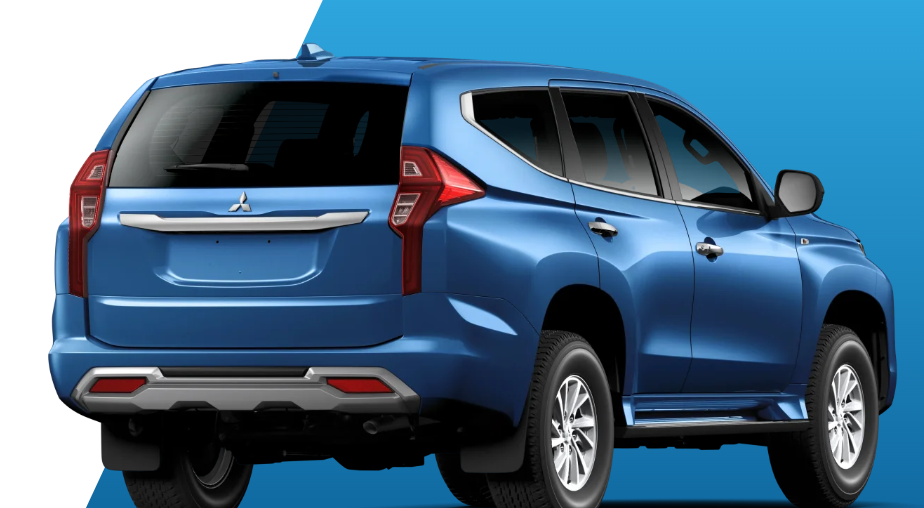
Mitsubishi might be reviving the legendary Pajero in 2026. The Japanese automaker has confirmed a “true cross-country SUV” is coming, and all signs point to the return of their most iconic off-roader. Think body-on-frame construction, a rugged 2.4L twin-turbo diesel, and that legendary Super Select 4WD system. Here’s everything you need to know.
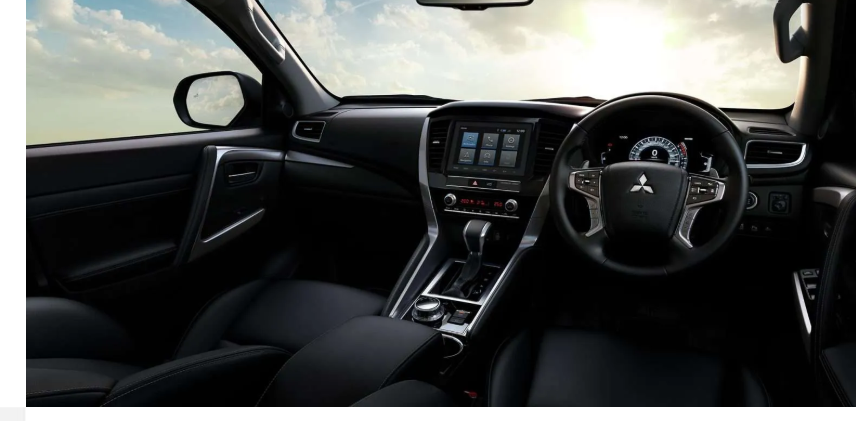
So, What Exactly Is Mitsubishi Planning?
For the past several years, Mitsubishi has been quietly focusing on crossovers like the Outlander and smaller SUVs like the Eclipse Cross. These are perfectly fine cars for city driving, school runs, and the occasional gravel road. But let’s be honest — they’re not “real” off-roaders.
Now, something has changed.
Mitsubishi’s CEO has been saying things like “we are evaluating a return to body-on-frame SUVs.” And on their official future roadmap, there’s a slot reserved for a “true cross-country SUV” arriving in 2026.
That phrase — “true cross-country” — is important. It means Mitsubishi isn’t building another soft-roader. They’re building something that can actually go anywhere, just like the old Pajero used to.
Why Everyone Thinks It’s the Pajero
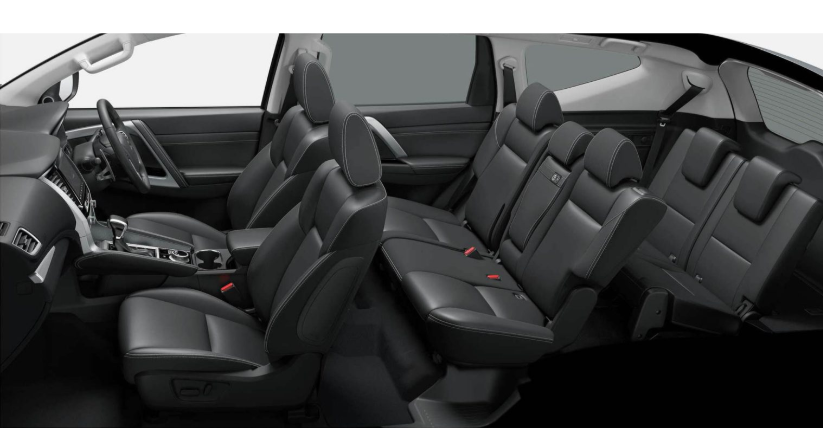
The Pajero name is legendary. First launched in 1982, it dominated the famous Dakar Rally with 12 overall wins — more than any other manufacturer. It was the SUV of choice for explorers, journalists, and anyone who needed a vehicle that wouldn’t break down in the middle of nowhere.
Production ended in 2021, and fans have been asking for a comeback ever since.
Now, here’s why the signs are so strong:
- Mitsubishi has renewed the Pajero trademark in multiple countries
- The description “true cross-country SUV” matches exactly how Mitsubishi used to describe the original Pajero
- The timing (2026) gives engineers enough time to develop a proper successor
Nothing is officially confirmed yet. But if you’re a betting person, put your money on the Pajero name returning.
Old-School Construction for Real Durability
Here’s where things get interesting — and a little old-school.
Most modern SUVs use something called “unibody” construction. That means the frame and the body are welded together into one piece. It’s lighter, saves fuel, and handles better on paved roads. Almost every crossover you see today uses this design.
But the new Mitsubishi SUV is reportedly going back to “body-on-frame” construction.
What does that mean? Imagine a heavy-duty metal ladder (that’s the frame). The engine, transmission, and suspension bolt onto that ladder. Then, the body (the part you sit in) gets bolted on top. It’s heavier and less fuel-efficient, but it’s incredibly strong and durable.
This is the same construction used in pickup trucks, the Toyota Land Cruiser, and the old Pajero. It can handle rocks, mud, deep water, and years of abuse without falling apart.
The frame will likely be shared with the Mitsubishi Triton pickup (also called the L200 in some markets). That’s a good thing — the Triton’s ladder frame is brand new (introduced in 2023) and built like a tank.
What About the Engine?
Under the hood, Mitsubishi is expected to use a 2.4-litre twin-turbocharged diesel engine.
Now, I know what you’re thinking — “Diesel? Isn’t that going away?” And you’re right, diesel isn’t as popular as it used to be. But for serious off-road driving, diesel still makes the most sense. Why? Because diesel engines produce tons of low-end torque — that’s the pulling power you need to crawl over rocks or climb steep hills.
This particular engine already exists in the current Triton pickup, where it produces about 200 horsepower and a very healthy 470 Nm of torque. For the SUV version, Mitsubishi might turn up the boost to get even more pulling power.
But There’s Also a Hybrid Version
Here’s the clever part.
Mitsubishi knows that not everyone wants a diesel. Especially in places like Europe, where emissions rules are getting stricter every year.
So, they’re also planning a plug-in hybrid (PHEV) version for select markets.
How would that work? The hybrid would likely use a petrol engine (not diesel) paired with one or two electric motors and a battery pack big enough for 50–80 kilometres of electric-only driving. You could do your daily commute on battery power, then switch to the petrol engine for long highway trips or off-road adventures.
Mitsubishi already makes the Outlander PHEV, which is the best-selling plug-in hybrid SUV in the world. They know what they’re doing here.
The Legendary Super Select 4WD System
One of the things that made the old Pajero so special was its “Super Select” four-wheel-drive system.
Unlike cheaper systems that force you to stop the car and get out to lock the hubs (yes, that used to be a thing), Super Select lets you switch between 2WD and 4WD while driving — even at highway speeds.
Here are the modes you get:
- 2H (2WD High): Just rear-wheel drive. Use this on dry paved roads to save fuel.
- 4H (4WD High): Full-time all-wheel drive. Use this in rain, snow, or light off-road conditions.
- 4HLc (4WD High Locked): Center differential locked. Use this on sand, gravel, or muddy trails.
- 4LLc (4WD Low Locked): Low-range gearing. Use this for rock crawling, steep descents, or pulling a heavy trailer.
For the 2026 model, expect an upgraded version with electronic controls, terrain response modes (Mud, Sand, Rock, Snow), and possibly a rear locking differential for extreme conditions.
How Is This Different From the Triton Pickup?
Good question. Since they share the same frame, you might think the SUV is just a Triton with a covered bed. But that’s not true.
Here are the big differences:
| Feature | Triton Pickup | New Pajero SUV |
|---|---|---|
| Rear suspension | Leaf springs (for heavy loads) | Coil springs (for comfort and articulation) |
| Seating | 5 people | 5 or 7 people |
| Interior | Tough and work-ready | Premium and quiet |
| Ride quality | Bouncy when empty | Smooth and refined |
The most important change is the rear suspension. Pickups use leaf springs because they need to carry heavy payloads (up to one tonne). SUVs use coil springs because they prioritise ride comfort and off-road flexibility.
So no — this won’t just be a Triton with a roof on it. It will be a proper, purpose-built SUV.
Will It Come to India?
This is the question every Indian off-road enthusiast wants answered.
The honest answer is: probably, but it won’t be cheap.
Mitsubishi’s presence in India has been very quiet since they parted ways with Hindustan Motors back in 2015. These days, they only bring in a few cars as completely built imports.
If the new Pajero comes to India, it will likely be a CBU import — meaning it comes fully assembled from overseas. That attracts high import duties, which push up the price.
Expected price range: ₹1.2 crore to ₹1.8 crore (ex-showroom)
That puts it in the same neighbourhood as the Land Rover Defender, Toyota Land Cruiser 300, and Mercedes-Benz G-Class.
Is that expensive? Yes. But for serious off-road lovers who want a Japanese legend, it might be worth every rupee.
One more thing — the hybrid version might actually be easier to bring to India than the diesel. India’s fuel efficiency rules (called CAFE norms) favour hybrids, and Mitsubishi already has the technology ready.
When Can You Actually Buy One?
Here’s the expected timeline based on everything we know from leaks, analyst reports, and supply chain whispers:
- Late 2025: Mitsubishi releases the first official teaser images
- Early 2026: Global debut at a major auto show (likely Tokyo or Geneva)
- Late 2026: Production starts in Thailand (Mitsubishi’s main SUV factory)
- Late 2026 to early 2027: First deliveries in Asia and Australia
- Mid 2027: Europe and India launch
- Late 2027: North America (where it might be called Montero instead of Pajero)
Remember, these dates aren’t official. Mitsubishi could change plans. But this is the most likely roadmap.
What About an Electric Pajero?
Not for 2026, sorry.
A pure electric off-roader would need a completely different platform — not the ladder-frame shared with the Triton. Electric SUVs are heavy, and batteries don’t like extreme cold or extreme heat. Plus, charging infrastructure in remote areas (deserts, mountains, forests) is still a problem.
The plug-in hybrid is the smart compromise. You get electric driving for daily use and petrol power for adventures.
Maybe by 2030, we’ll see a fully electric Pajero. But for now, the PHEV is as green as it gets.
A Quick Comparison: Pajero vs Rivals
If the new Pajero arrives, here’s how it will likely stack up against its main competitors:
| SUV | Construction | Engine | Starting Price (approx) |
|---|---|---|---|
| Mitsubishi Pajero (2026) | Body-on-frame | 2.4L diesel or PHEV | ₹1.2 crore |
| Toyota Land Cruiser 300 | Body-on-frame | 3.3L diesel V6 | ₹2.5 crore |
| Land Rover Defender | Unibody | 2.0L petrol/diesel | ₹1.5 crore |
| Mercedes G-Class | Body-on-frame | 4.0L V8 petrol | ₹2.5 crore |
The Pajero’s biggest advantage? Price. If Mitsubishi can bring it in at ₹1.2–1.5 crore, it undercuts the Land Cruiser by a huge margin while offering similar capability.
Should You Be Excited?
If you love proper, honest, no-nonsense SUVs — yes, absolutely.
The automotive world has been moving towards softer, more car-like SUVs for years. Real off-roaders with ladder frames, low-range transfer cases, and locking differentials are becoming rare. Even the legendary Land Rover Defender gave up its body-on-frame construction in 2020.
Mitsubishi is going the opposite direction. They’re doubling down on durability, capability, and old-school toughness.
That’s worth celebrating.
A Few Things to Keep in Mind
I want to be honest with you. The new Pajero won’t be perfect for everyone.
It won’t be fuel-efficient. A heavy, body-on-frame SUV with a diesel engine will drink more fuel than a crossover. That’s just physics.
It won’t be cheap. Real off-road hardware costs real money.
It won’t be easy to park in the city. This is a big vehicle. Tight underground parking lots will be a challenge.
It might not come to your country. Mitsubishi will pick and choose markets. If you live in a country with very strict emissions laws or low demand for large SUVs, you might miss out.
But for the person who actually needs a go-anywhere vehicle — or simply wants one because they love adventure — none of those drawbacks matter.
Mitsubishi is bringing back the spirit of the Pajero in 2026. A rugged, body-on-frame, go-anywhere SUV with a strong diesel engine, a clever hybrid option, and a legendary four-wheel-drive system.
The name isn’t officially confirmed yet. But the clues are everywhere.
If you’re an off-road enthusiast, an overlanding traveller, or just someone who misses the days when SUVs were actually tough — keep an eye on Mitsubishi’s announcements starting late 2025.
The king might be coming back.